Florida DMV Practice Test 8
Practice test 8 of 8: 50 questions in the Florida knowledge test format, from the official handbook. Free, with explanations in 5 languages.
Loading questions…
Questions and answers in this test (50)
Open the list after you finish the test, or use it to review.
Cold and allergy medicines you buy without a prescription:
Answer: Can make you drowsy
Many over-the-counter cold, allergy and headache medicines can cause drowsiness. Check the label for warnings before you drive.
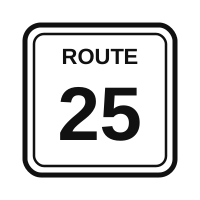
This sign means:
Answer: A state-numbered route
A route marker with black numbers on white identifies a state route.
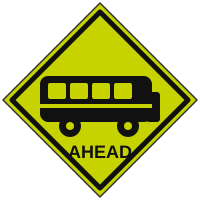
The school bus ahead is showing flashing yellow lights. This means:
Answer: The bus is about to stop; get ready
Flashing yellow lights warn that the bus is about to stop, so slow down and be prepared to stop.
Traffic is backed up just past a railroad crossing. You should:
Answer: Wait before the tracks until there is room to cross completely
Never start across railroad tracks unless there is room on the other side to clear them completely without stopping.
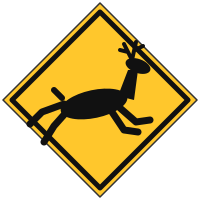
A yellow diamond sign showing a leaping deer means:
Answer: Deer often cross here — watch for animals
Deer often cross in this area, especially at dawn and dusk.
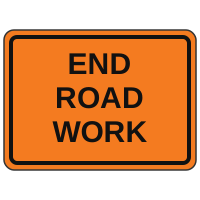
Until when should you follow work zone rules and speed limits?
Answer: Until you see "End Road Work"
Observe the posted signs until the End Road Work sign appears.
A steady yellow X signal is lit above the lane you are driving in. You should:
Answer: Safely move out of that lane
A steady yellow X means the lane is about to change direction or close. Move out of it as soon as you safely can.
If your car starts to hydroplane on a wet road, you should:
Answer: Ease off the gas and keep the wheel straight
Take your foot off the gas and steer straight until the tires regain traction; do not brake hard.
In Florida, unless otherwise posted, the speed limit in a residential district is:
Answer: 30 mph
Florida: 30 mph in residential districts unless a sign shows otherwise.
Which three parts make up your total stopping distance?
Answer: Perception, reaction and braking distance
Total stopping distance is the distance you travel while you notice the danger, move your foot to the brake, and brake to a stop.
When is it a good idea to use your high beams?
Answer: On dark open roads with no other vehicles nearby
High beams let you see farther; use them on dark roads when no other vehicles are close.
After a crash, electrical wires are down and touching your car. You should:
Answer: Stay inside the vehicle until help arrives
Stay inside and warn others to stay away until help arrives.
Compared with dry pavement, on a wet road your car will:
Answer: Need a longer distance to stop
Wet roads are slippery: it takes longer to stop and it is harder to turn. Reduce your speed.
Large trucks have big blind spots ("No-Zones"). If you cannot see the truck driver in the truck's side mirrors:
Answer: The truck driver cannot see you
If you cannot see the driver in the truck's side mirrors, the driver cannot see you. Do not linger in No-Zones.
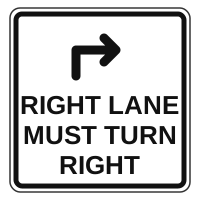
You are in the right lane at an intersection with this sign, but you want to go straight. What must you do?
Answer: Change lanes before the intersection
A right lane marked this way must turn right, so go straight only from another lane.
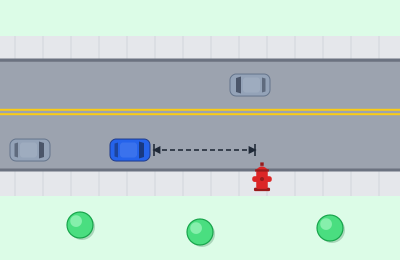
In Florida, you may not park within how many feet of a fire hydrant?
Answer: 15 feet
Florida: do not park within 15 feet of a fire hydrant.
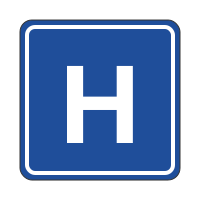
A blue square sign with a white H is what kind of sign?
Answer: A motorist service sign
Blue signs show motorist services such as hospitals, gas, food and lodging.
In Florida, children ages 4 and 5 must ride in:
Answer: A child safety seat or a booster seat
Under 4: safety seat. Ages 4–5: safety seat or booster seat.
At higher speeds, you have:
Answer: Less time to spot and react to hazards
The faster you drive, the less time you have to see a hazard and react to it.
Railroad crossing lights have stopped flashing, but the gate is still partly down. You should:
Answer: Wait until the gate is all the way up
Do not cross until the lights and bells stop and the gates are completely up.
At a crash scene, why should you warn approaching traffic with hazard lights, flares or a person?
Answer: To prevent more crashes at the scene
Warning approaching drivers protects the scene and the people there from being hit by other vehicles.
On a divided highway or a one-way street, a solid yellow line on your left marks:
Answer: The left edge of the road
On divided highways and one-way roads, a yellow edge line marks the left edge of the pavement.
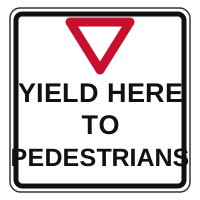
A car in the next lane has stopped before a crosswalk. What should you do?
Answer: Pass it if you see nobody crossing
A car stopped at a crosswalk may be hiding a pedestrian, so never pass it.
On a narrow, winding road you should:
Answer: Reduce your speed
Narrow or winding roads give you less room and a shorter view ahead, so slow down.
In Florida, what happens to traffic fines for speeding in a highway work zone?
Answer: They can be doubled
Florida: fines for speeding in work zones can be doubled.
Where should you mainly look while driving?
Answer: Well ahead, up the road
Looking well ahead gives you time to see problems and react, and helps you keep a steady path.
What is the only thing that sobers up a person who has been drinking?
Answer: Time
Only time lets the body remove alcohol. Coffee, showers and fresh air do not lower BAC.
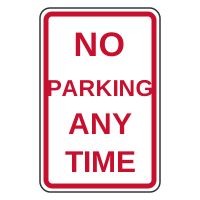
This sign means:
Answer: No parking at any time of day
The red 'NO PARKING ANY TIME' sign bans parking every hour of every day.
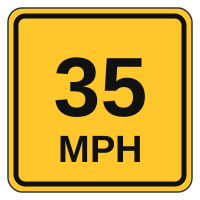
A yellow plaque reading '35 MPH' is mounted below a curve warning sign. It means:
Answer: The safe speed for the curve is 35 mph
The plaque gives the advisory speed for the hazard above it; it is a recommendation, not the law.
The rear of your car starts to skid. You should:
Answer: Turn the steering wheel in the direction you want the car to go
In a rear-wheel skid, steer in the direction you want the vehicle to go, and avoid hard braking.
How does alcohol affect your reaction time?
Answer: It makes you react more slowly
Alcohol slows your reflexes, so you need more time to see a danger and respond to it.
The fog becomes so thick that you can barely see. You should:
Answer: Pull off the road, stop and turn on your emergency flashers
In very thick fog, get completely off the road and use your flashers so others can see you.
Because of the air bag, how should the driver sit?
Answer: Well back from the steering wheel
An air bag inflates with great force; sitting well back from the wheel lowers the risk of injury from it.
A large truck is going through a roundabout next to you. What should you expect?
Answer: It may need more than one lane, so give it plenty of room
Large trucks and buses may swing wide or use the full width of a roundabout. Do not drive beside them; give them room.
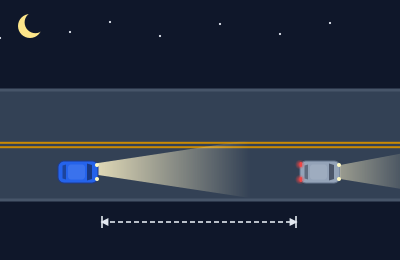
At night you come up behind another car going the same way. Your headlights should be on:
Answer: Low beams
High beams reflect in the mirrors of the car ahead and blind the driver, so use low beams when following.
When driving through a work zone, you should:
Answer: Slow down and be ready to stop suddenly
In a work zone, slow down, leave more space ahead and be ready to stop. Traffic may slow or stop without warning.
A car in the next lane has stopped at a crosswalk. You should:
Answer: Stop too — a pedestrian may be crossing
Never pass a vehicle stopped at a crosswalk. It may be stopped for a pedestrian you cannot see.
Why turn on your headlights on a rainy or gray day?
Answer: So other road users can see you
Headlights help others see your car in rain, snow, fog and on gray days, not only at night.
Diet pills and "pep pills" (stimulants) can:
Answer: Later make you nervous, dizzy and unable to focus
Stimulants may make you feel alert for a short time, but they can later cause nervousness, dizziness and poor concentration.
Your car breaks down on the highway. You should:
Answer: Pull as far off the road as possible and turn on your flashers
Get the vehicle off the road, away from traffic, and turn on the emergency flashers so others can see it.
You feel very sleepy while driving on a highway. The best thing to do is:
Answer: Pull off in a safe place and rest
Only rest helps. Pull off into a safe area and take a short nap; schedule breaks on long trips.
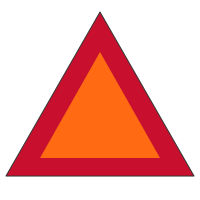
An orange triangle with a red border on the back of a vehicle means:
Answer: The vehicle is slow-moving (usually 25 mph or less)
This emblem marks farm equipment and other slow vehicles; slow down early and pass only when safe.
When it comes to alcohol and driving, what matters most is:
Answer: How much alcohol you drink
Beer, wine and liquor all contain alcohol. The amount of alcohol that enters your blood is what impairs you, not the type of drink.
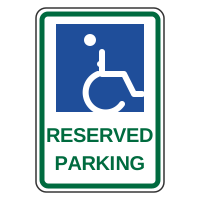
May you park in the striped access aisle next to an accessible space?
Answer: No, never, even with a valid permit
The striped aisle must stay clear so ramps and wheelchairs can get out; parking there is banned even with a permit.
In Florida, outside cities and towns, a truck may not follow another truck closer than:
Answer: 300 feet
Outside cities and towns, a truck must not follow within 300 feet of another truck, except when passing.
If you are involved in a crash that causes only minor property damage, you must:
Answer: Stop and exchange information with the other driver
Always stop. Exchange name, address, license, registration and insurance information.
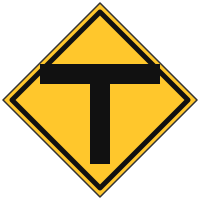
A yellow diamond sign shaped like the letter T means:
Answer: The road ends ahead; you must turn left or right
The road you are on ends at a T intersection; prepare to turn.
You are about to reach the street where you wanted to turn, but you are in the wrong lane. You should:
Answer: Go on and make the turn somewhere else
If you are not in the proper lane, do not force the turn or back up. Continue and turn at the next safe place.
How does your speed affect your stopping distance?
Answer: The faster you go, the longer the distance to stop
The faster you are going, the more time and distance you need to stop.
Where should you never let your car's engine run?
Answer: In a closed garage
Exhaust fumes build up quickly in a closed space and can cause carbon monoxide poisoning.
About this test
Questions come from the Official Florida Driver License Handbook (rev. 05/22/2020) and from rules that apply in every state. Each answer shows its source.
More Florida tests
Group 1
Start here
Full practice tests in the format of the real Florida knowledge test. Questions do not repeat between tests.
Group 2
Road signs
Shapes, colors and meanings of the signs on the test.
Group 3
Rules of the road
Right of way, turns, parking and sharing the road.
Group 4
Safe driving
Night, weather, emergencies, alcohol and what to do after a crash.
Group 5
Florida laws
Rules that are specific to Florida.
Group 6
Final exam prep
Check that you are ready before test day.